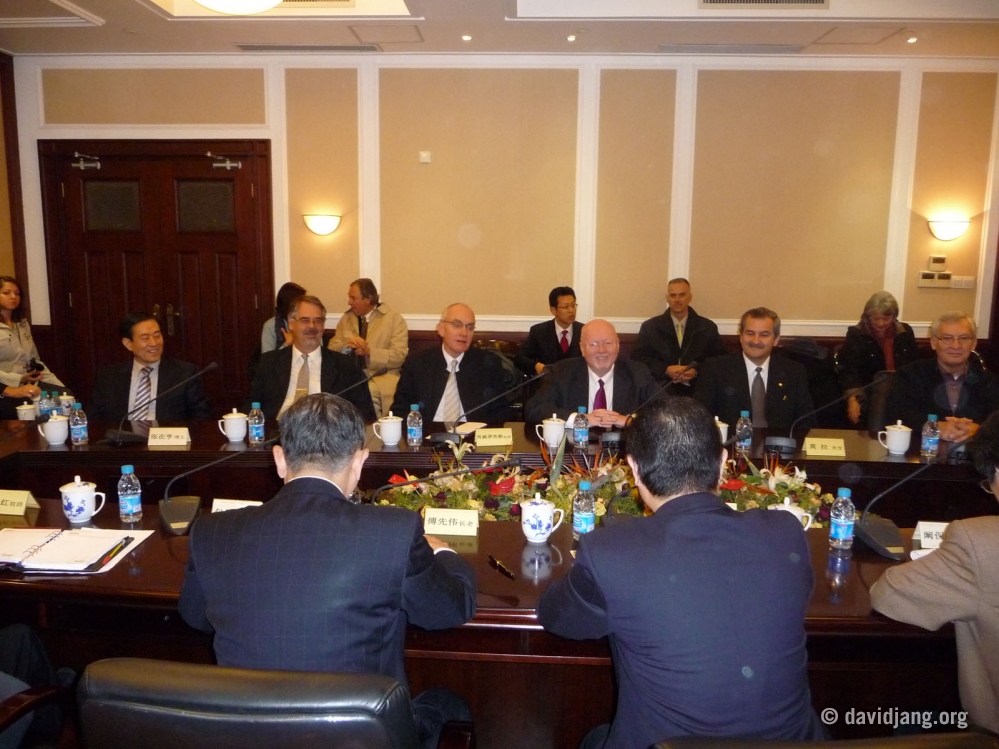
Radiant Grace Flowing Through Broken Cracks – Pastor David Jang (Olivet University)

On a Stormy Night, a Lost Soul Encounters the Light of Providence

People say that the darker the night, the brighter the stars shine. Yet when the fierce waves of life begin to swallow the ground beneath our feet, we often forget even that self-evident truth. In moments of despair, when it feels as though walls are closing in on every side, human beings finally confront their own finitude and begin to thirst for the Absolute. This unwelcome guest we call “suffering” may, in fact, be a paradoxical invitation sent by God so that He may meet His children most intimately.

The message of Pastor David Jang begins precisely at this point. He does not treat the Apostle Paul’s second missionary journey as a mere historical record of the past, but lifts it onto the horizon of our lives today. Along the rugged road Paul walked, careful human planning, unexpected persecution, and the vast providence of God that overshadowed them all were deeply intertwined. When we despair at what seems to be a dead end in life, Pastor David Jang reminds us that such a dead end may actually become a heavenly passageway expanding the territory of the gospel.

A Duet of Suffering and Glory Embroidered on Canvas

Consider Rembrandt, the great master of the Baroque era, and his painting Christ in the Storm. Inside a small boat that seems about to capsize beneath raging waves, the disciples cry out in terror. Yet at the very center of the chaos, Jesus Christ lies peacefully asleep, forming a striking contrast. The resonance of this masterpiece is unmistakable. Light reveals its true nature only in the presence of darkness, and a storm is not always meant to sink the ship; sometimes it becomes the very force that drives us toward our destination.

This artistic insight is deeply connected to the principle of “making a road (道路)” that Pastor David Jang proclaims. Paul was a strategist with a grand vision of reaching Rome and even Spain, yet what hastened his steps was none other than the fierce persecution of the Jews. His involuntary departure from Thessalonica, driven by persecution, ultimately gave rise to the miracle of churches being established in Berea, Athens, and Corinth. Pastor David Jang calls this “the road (路) on which truth (道) travels,” emphasizing that when the external pressure of suffering meets human intention, the work of God is finally brought to completion. The pain we endure does not remain merely as a wound, but becomes a channel through which other souls are saved. That is the mysterious dynamism of the gospel.

Heavenly Comfort Poured into the Empty Vessel of Weakness

The true depth of biblical meditation becomes all the richer when we are brought to our lowest place. In order to care for the believers in Thessalonica who were in the midst of tribulation, Paul sends Timothy, his most beloved co-worker. What is noteworthy is that Timothy was by no means a flawless hero. He was young, physically frail, and at times timid—a vulnerable young man.

Here Pastor David Jang offers a remarkable theological insight. God deliberately placed weak Timothy at the forefront of ministry so that, through his very insufficiency, believers would learn to depend on and help one another. Where the strong dominate, there may be order; but where the weak join hands with one another, there flow the warmth of love and comfort.

Recall that the English word comfort traces back to the Latin fortis, meaning “strong.” Comfort is not merely a sentimental act of wiping away tears. It is a spiritual force that rebuilds the broken walls of a soul devastated by suffering. In Pastor David Jang’s preaching, we find ourselves confessing the very essence of the gospel: that when I am weak, God’s strength is finally revealed, and that our very presence can become a source of life-giving comfort to one another.

The Fragrance of Hope Blossoming Upon Steadfast Faith

In the end, Christian grace is not a lucky escape from suffering, but the courage to press through it. Paul could cry out, “Now we live,” simply upon hearing that the Thessalonian church was standing firm in faith. This holy union—in which the life of the minister is bound up with the spiritual growth of the believers, and the peace of the believers is intertwined with the earnest prayers of the minister—is the true face of the church.

Even today, the environment surrounding us is far from easy. Yet, as Pastor David Jang’s message makes clear, when we reach out to one another in love within the Lord, a peace that the world cannot give descends upon us. Even if your life now appears shattered and broken, do not lose heart. Those very cracks are the openings through which the grace of God seeps in most clearly.

We must once again stand upon the road of the gospel. We must rejoice even in tribulation, trust in the wisdom of God who raises up the weak, and build a community of comfort that calls one another by name. Engraving the deep resonance of Pastor David Jang’s message upon our hearts, may we each become true Christians who carve out a beautiful heavenly road in the places where we live. As we love one another more fervently with the heart of a bride waiting for the Lord’s return, our suffering will one day be transformed into a radiant crown of glory.

www.davidjang.org

A Woman Who Shattered the World’s Calculator: Sacred Extravagance, and the Cross – Pastor David Jang (Olivet University)

A lavish banquet hall in Jerusalem, wrapped in deepening twilight. Amid the low murmur of conversation and the crisp clink of cups, a sharp sound sliced through the air—crack! The room fell into a heavy silence. There, a woman knelt and broke what was both her entire fortune and her most precious treasure: an alabaster jar of pure nard. She poured it out, soaking Jesus’ feet. As the room filled with a thick, trembling fragrance, some frowned and accused her of wasting wealth, while others whispered that it was incomprehensible fanaticism.

Yet what flowed through those broken shards was not merely expensive oil. It was a sign—an unspoken prophecy of Jesus’ body that would soon be shattered on the hill of Golgotha. And before that, it was the pure and fierce confession of a soul that had poured out her whole self in love. Brief but incandescent, this story still knocks against the hardened doors of our hearts thousands of years later, asking with unsettling clarity: What does real love look like?

Fragrant Shards: Defying the Age of Efficiency

We live in a bleak age that turns everything into numbers and argues over cost-effectiveness. Even the human heart is treated like a line item on a profit-and-loss statement. In such a world, the woman’s act—pouring out in an instant what amounted to three hundred denarii—can only look reckless.

Reflecting on this vivid Gospel scene, Pastor David Jang names what the world cannot explain with a paradoxical phrase: “sacred extravagance.” His profound preaching reminds us that love, by its very nature, cannot be translated into the language of economic efficiency. While Judas Iscariot and the disciples tap away at their calculators under the rational banner of helping the poor, Jesus praises the woman instead, declaring that she has prepared His burial fully. In doing so, He announces a law of Cross-shaped grace: love is not completed by hesitating over conditions, but by being poured out without remainder.

Only the One Who Gives All Knows the Weight of Love

This message of radical self-emptying and devotion runs like an unbroken thread through the great works of Christian history. In C.S. Lewis’s classic Mere Christianity, we find a piercing theological insight that reaches into the essence of this “sacred extravagance.” Lewis insists that what Jesus Christ asks of us is not a reasonable portion of our time or leftover resources, but our whole self.

His declaration—often summarized like this: “I don’t want some of your time or some of your money; I want you.”—resonates powerfully with the truth of the broken jar. The woman did not offer perfume alone; she offered her very existence, the entirety of her life. As Pastor David Jang emphasizes, real love cannot be divided into neat fractions, nor can it be postponed as we bargain for future security. The woman understood with the instinct of the soul that if she did not give everything now, she might lose forever the chance to love at all. And that immediate obedience placed her life inside the eternal history of the Gospel.

Tears on Canvas: Becoming an Everlasting Trace of the Gospel

This breath-stopping moment of devotion has stirred artists for centuries, becoming a timeless setting for biblical meditation. In Paolo Veronese’s monumental 16th-century work, Feast in the House of Simon, amid marble columns and a sumptuous banquet, only one figure lies low to the ground: the woman. While the powerful and the wealthy remain absorbed in their worldly interests, she alone offers wholehearted worship to the King of Heaven. Later, the Baroque master Peter Paul Rubens captured the same scene with dramatic contrasts of light and shadow, setting the cold gaze of the world against the woman’s burning repentance.

What is striking is this: what the world might have dismissed as inefficient “waste”—these artistic “extravagances”—still shake countless souls hundreds of years later. Through such testimony from art history, Pastor David Jang proclaims that tears and devotion poured out for the Kingdom of God never scatter into empty air. They become an enduring fragrance of the Gospel, awakening generations to come.

Today: Standing Before My Unbroken Jar

Then what is the alabaster jar for us—twenty-first-century people sprinting toward success and achievement? Pastor David Jang insists that this jar is not limited to money alone. It includes the career path I refuse to surrender, the golden hours I guard obsessively, the shallow pride and stubborn will that insists on controlling life on my terms. These are our jars—each one meant to be shattered and broken at the Lord’s feet.

By the world’s logic, there is no waste more foolish and inefficient than this: the Son of the Creator God giving His life on the Cross for sinners. And yet, paradoxically, it was precisely that sacred extravagance of the Cross that saved our dead souls. Pastor David Jang urges us: only those who have truly encountered this love that surpasses calculation can gain the freedom to break their own jar willingly.

Will you stop settling for “reasonable” compromises that you keep postponing—and be ready today to let what is most precious in your hands be poured out? When we smash the calculator named efficiency and choose the “waste” called love, our rough, ordinary lives will finally be shaped into a holy and beautiful masterpiece of the Gospel.

www.davidjang.org